
Introduction
This is one of the common skin diseases that are diagnosed in veterinary all over the world. It is a term of reference of a bacterial infection of the skin which can be mildly involved of the skin surface all the way to deep tissue disease.
The awareness of the bacteria, which cause pyoderma in dogs, is critical because the correct diagnosis directly influences the efficacy of the treatment and the outcome of long-term treatment. Clinically and preventively primary and secondary pyoderma, in dogs, can be separated to allow a veterinarian to cure the infection using options such as mebendazole 500 mg, and to also cure the contributing factors underlying the phenomenon that have promoted the recurrence.
What Is Pyoderma in Dogs?
Pyoderma in dogs is a skin disease caused by bacteria, which is inflammatory, and is accompanied by pustules and various degrees of tissue destruction. The disease is broadly categorized as the surface infections, superficial infections, and deep infections based on the level of the penetration of the bacteria into the layers of the skin.
The surface forms affect the surface alone, but in the case of dogs surface deep pyaderma can involve hair follicles, dermis and even subcutaneous tissue. Other breeds are more prone to it like Bulldogs, German Shepherds and Retrievers which are genetically, anatomically or immune.
Primary Bacteria Responsible for Pyoderma
The most common microbe as the cause of pyoderma in dogs is staphylococcus pseudintermedius. This bacterium is classified as a normal flora of the canine skin i.e. in the majority of situations, it is not harmful and does not lead to any disease.
In case the skin defenses are not intact then there will be the problems of excessive growth of bacteria that will result to clinical infection. In dogs, non-inflammatory colonization actively transforms into active infection in most cases with damage of the skin barrier.
With healthy skin, the dog suffers unwanted invaders that are kept in check by a balanced population of microbes in the skin. Pyoderma in dogs in case of breaking this balance results in the pathogenic overgrowth of harmless bacteria. Some of the factors that create an environment that facilitates the multiplication of bacteria are moisture, inflammation or micro trauma. This is the reason why dogs with pyoderma of the second order instead of the first order have it.
Even though Staphylococcus pseudin termedius is the most prevalent pathogen, it is sometimes possible that other Staphylococcus species can contribute to the evolution of the pilferedma in dogs. These organisms are not normally standalone but they may be relevant in the repetitive or unresponsive cases to treatment.
Their existence endorses the importance of the diagnostic tests rather than empirical treatment only. The correct diagnosis will ensure that the dogs with pyoderma are treated using the most suitable and applicable therapies.
Less Common Bacterial Causes
In some instances particularly in severe or complicated conditions, other bacteria may cause pyoderma in dogs. It may be staphylococcus aureus especially in cases where human and animals interact closely.
The Streptococcus species may also be potential contributory factors but are not prevalent in the routine cases. Additionally, other organisms such as Pseudomonas aeruginosa and Proteus species tend to be associated with deep or recalcitrant pyoderma in dogs and tend to be predictors of underlying problem requiring further research.
How Dogs Develop Bacterial Pyoderma
Pyoderma is a normal occurrence of the skin protective barrier in dogs when it is destroyed. Bacteria gain entry to the body by scratching, laceration, hot spots or incessant dampness. Allergies, food related and environmental sensitivities are the most prevalent underlying factors that predispose dogs to pyoderma in dogs. The body is even more vulnerable to infection due to dysfunctions in hormones such as hypothyroidism or Cushing disease and immunosuppression.
Symptoms of Pyoderma in Dogs
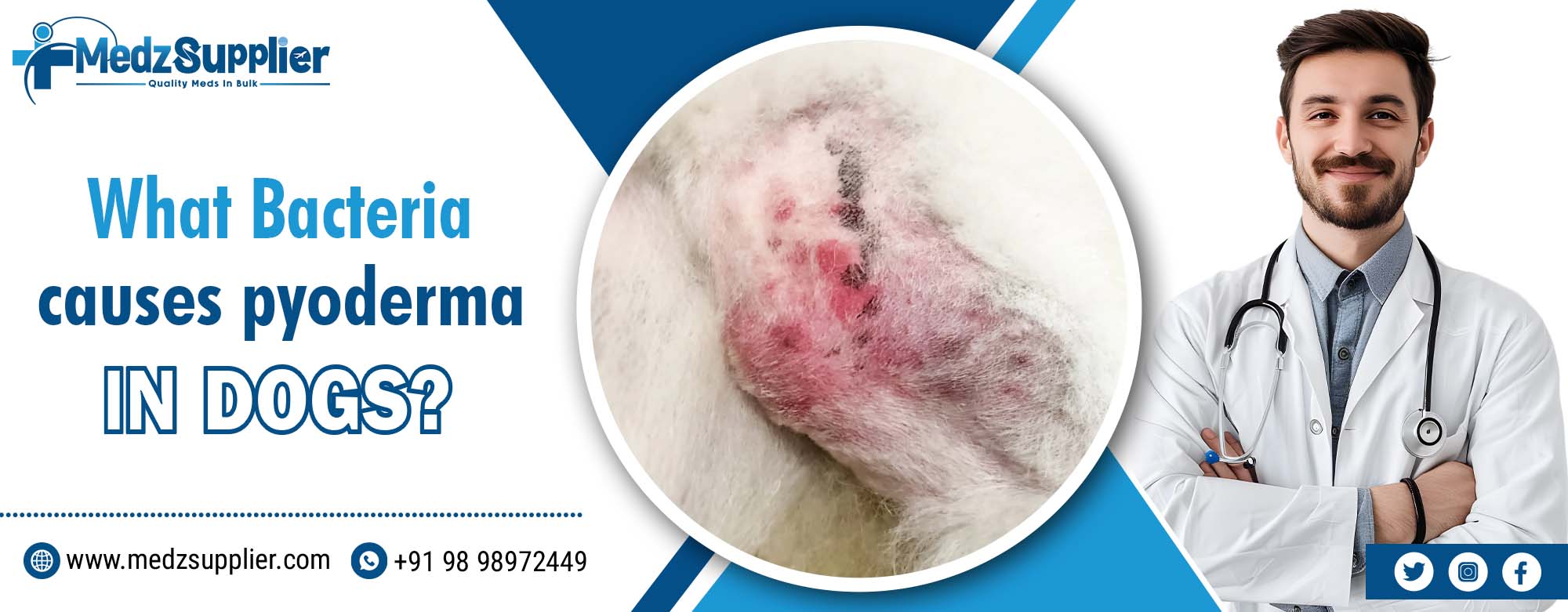
Some of the clinical manifestations of pyogeneses in dogs depend on the type of infections in the dogs regarding the depth and severity of the attack. The common ones are the redness, pustules, papules and the apparent inflammation of the skin. Loss of hair, crusting and scaling are common superficial infections. There is a likelihood of chronic cases of pyoderma in dogs leading to thickening of the skin, bad smell, and widespread pain which will influence the overall quality of life.
Diagnosis of Bacterial Pyoderma
The pyoderma in dogs should be managed, but it cannot be done without diagnosing it. The doctors often start by doing a thorough physical examination and reviewing the dog’s medical history.
The rapid diagnosis of bacteria and inflammatory cells and the immediate treatment instructions have also been identified with the help of skin cytology. Bacterial culture and sensitivity testing are necessary in recurrent or severe pyoderma in dogs in order to determine antibiotic resistance including methicillin-resistant.
Treatment Based on Bacterial Cause
Treatment of pyoderma in dogs varies depending on the cause of the disease which is a bacteria and the level of the disease. Light cases are normally treated through the use of topical therapy such as medicated sprays and shampoos and contribute in reducing the volume of bacteria but does not expose the system to it.
The systemic antibiotics might be required when it is more widely infected and the decision depends upon results of the diagnostic tests and resistance. In terms of the supply-chain, the cephalexin wholesale is also relevant to maintaining access to the medication. The correct choice of the drug plays an important role in the veterinary care, which is also significant regarding the sourcing.
Prevention and Management
Though options such as cephalexin capsules supplier are applicable, the prevention of pyoderma in dogs is achieved in the long run by focusing on treatment of predisposing factors as well as health of the skin. By regular grooming, good bathing habit and effective management of the parasites, bacterial overgrowth is minimized. The cornerstone of prevention of relapse of pyoderma in dogs is regular treatment of allergies and chronic diseases.
Another important aspect concerns the need not to administer antibiotics without any necessity in order to reduce the resistance and preserve effectiveness of treatment.
When to See a Veterinarian
The veterinary is to assess the skin lesions as early as possible when they turn to be severe, spreading, or unresponsive to initial therapy. The common presence of pyoderma in a dog is probably the symptom of a condition that requires diagnostic research and special care.
The urgency is caused by symptoms of a deep infection such as swelling, pain, or an overall illness. The earlier one acts by contacting the veterinary or buying medication from Medzsupplier, the more positive the results will be and the fewer risks of having a chronic disease.
Conclusion
It is the most common cause of pyoderma in dogs with other contributing bacteria to situations that are particular or difficult. The bacterial etiology of pyoderma in dogs enables to diagnose it correctly, treat and prevent it correctly. Diagnostic-based targeted therapy is also useful in limiting the antimicrobial resistance as well as minimizing the recurrence. In conclusion, the informed clinical management has played the key role in the management of pyoderma in the dogs and the health of the canine skin in the long run.