
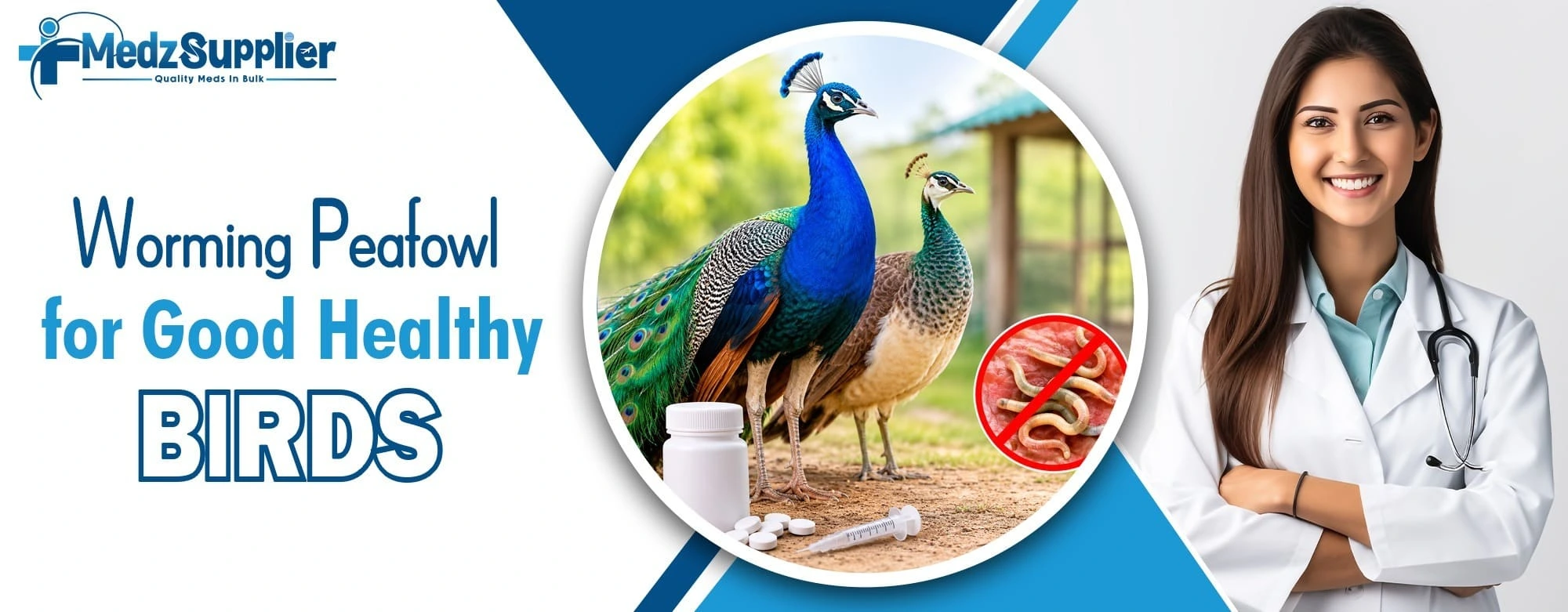
What Is Worming in Peafowl?
- Worming is the anticipated use ofanthelmintic medication for the removal of internal parasites from the peafowl. Management practices in Worming Peafowl are also considered in the treatment for not just a successful elimination but also for keeping the infection levels low.
- Peafowl are known to spend most of their time on the ground. They keep foraging within the soil, the grass, and also the leaf litter. It further exposes them to worm eggs and makes them vulnerable to slugs, snails, and insects that normally carry larvae.
Worming should never be treated as a single-time event. It is a parasite control program that effectively combines the following:
- Routine Fecal Testing
- Clean Housing and Rotation of Pastures
- Targeted Treatment with Suitable Drugs
- Quarantine for the New Birds
Common Types of Worms in Peafowl
- There are multiple parasites shared by peafowl with turkeys, chickens, as well as game birds.
Here are some of them:
- Roundworms (Ascaridia species). These are the pale and large worms that live within the small intestine. Heavy burden may lead to loss of weight, improper growth in chicks, and in a few cases, intestinal blockage too.
- Cecal worms (Heterakis gallinarum). These have been known to survive in the ceca. They tend to carry Histomonas meleagridis, which is the same organism that is responsible for blackhead problems. These can be a severe concern in turkeys and peafowl.
- Hairworms / capillaria (Capillaria species). These are identified as the thinner worms that look like threads growing within the crop, intestine, as well as the esophagus. These can cause health concerns like diarrhea, poor appetite, and also the wasting. These can often be missed without any proper fecal examination.
- Gapeworms (Syngamus trachea). These are the red worms that are attached with the windpipe. They shake their heads, may affect with cough and birds gape and in a few cases, may also cause suffocation. The most vulnerable beings are the chicks.
- Tapeworms. Segmented and flatworms demand intermediate hosts, including slugs, beetles, ants, and snails. These are common in birds that have had access to ground filled with insects and also the ones that are damp.
- Gizzard worms. Birds are known to carry gizzard and Stomach Worms as per the region. These may lead to poor conditions and upset digestive systems in them.
- Patients may get a proper fecal flotation test done for the identification of parasites that are found. These can assist the vet pick a suitable drug for further treatment.
Signs and Symptoms of Worm Infestation in Peafowl
- Peafowl have always been smart in hiding their ailments. It may happen that the symptoms may appear late, and the burden of illness may worsen.
Here are some of the initial signs that you must watch out for:
- Loss of weight even after a normal diet intake
- Ruffled, dull, and inferior quality plumage
- Diarrhea, discolored droppings that are foamy
- Reluctance to move or lethargy
- Anemia signs like pale facial skin
- Reduction in egg production the hen’s eggs are thin-shelled
- Higher mortality rate in chicks and stunted growth
- Coughing, gaping, and shaking of heads
- Droppings that are Sulphur colored and yellow
- Drooping posture and lethargy
Why Is Regular Worming Important for Peafowl?
- Nutrients might be drained due to heavy worms, gut linings might be damaged, immunity may grow weaker. Birds may be prone to secondary infections thereafter. Parasites may slow down development, and losses may occur. When cocks are in poor condition, the breeding performance may be slow in them.
- When untreated birds shed eggs in the form of droppings, contamination of the entire ground is possible. The reason is that these eggs have the potential for prolonged survival.
- Risks of blackhead transmission are possible with controlled Cecal Worms. Most of the keepers tend to deworm as per the schedule which is common for a few times in on year. The common time is in spring before the breeding phase and also in autumn.
- The best time for deworming will depend on the climate, density of the stock, and the fecal test results. When the tests are done ahead of the treatment it can help through the prevention of unnecessary use of drug further supporting the resistance development.
Which Dewormers Are Used for Peafowl?
Some of the Common Dewormers used for this Purpose are:
- Fenbendazole: Targets the gapeworm, hairworms, and roundworms. Used with proper safety margins, it has been associated with feather abnormalities in a few species of birds. Medicines like Fenbendazole 444Mg and Fenbendazole 500Mg are used against worms. They may be targeted for gapeworms, roundworms, and hairworms. It can be given by mixing into feed and used under vet rules.
- Ivermectin/ moxidectin: Targets hairworms, roundworms, and a few external parasites. Weak against a few gapeworms in some cases. Dosing errors are possible, so be careful with medicines like Ivermectin 12Mg.
- Levamisole: Targets a few gapeworm activities and roundworms. It has a narrow form of safety margin hence overdosing can be a risk.
- Praziquantel: Targets tapeworms and is used when the presence of tapeworms has been confirmed.
- If you want to get quality and affordable deworming medicines online, browse the stock at Medzsupplier and have your preferred product delivered to your doorstep.
Common Mistakes to Avoid When Worming Peafowl
A few of the common mistakes that you must avoid include:
- Deworming without tests. Don’t do it, as it would encourage resistance. Make sure you first get your fecal egg count.
- Guessing doses. Weight of the peafowl may vary widely. Dosing should be as per vet recommendations after analyzing weight. It can be a risk with levamisole as well as the ivermectin-class drugs.
- Treatment for only a few birds. When the birds are untreated, they may keep shielding the eggs. The entire group should be treated together.
- Skipping repeat doses. When the worms are immature, they tend to survive the initial treatments. 2-3 doses as a second installment are usually advised.
- Ignoring environment. Eggs seem to persist in the damp soil. Droppings are removed, grounds rotated, and beddings are dried.
- Treatment during molt. Fenbendazole has been related to feather abnormalities in a few birds. You should ask your vet ahead of this window for treatment.
- Ignoring other worms and their illness. Diarrhea, Weight Loss, and the yellow droppings may indicate blackhead and coccidiosis. A vet should be consulted.
- Ignoring the tapeworms. Fenbendazole will not always effectively cover them all. When their existence has been confirmed, praziquantel may be required.
- Utilizing wrong products. Albendazole must be avoided as it can lead to toxicity in a few birds. Don’t use the cattle and horse products without vet guidance.
- No more retesting. Fecal count needs to be followed to ensure whether and how the treatment actually worked.
- Careless dosing for chicks. Peafowl chicks have been sensitive to the errors in dosing. Treatment must be carried out as per the advice of the vet.
Conclusion
- Effective Worming in Peafowl is more about precision than just a routine. Testing with fecal count is crucial before administration of the dose. Pick the drug that matches with the confirmed presence of the parasite and is effective in its elimination. Treat the entire group, choosing dosing by weight carefully. Only the medicine alone will not keep flock healthy. Vet consultation is important at each stage.